




Which Bit Fits a 63cc 2-Stroke Garden Hand Earth Auger?
When selecting drill bits for a 63cc 2-stroke garden hand earth auger, for compatibility, make sure that the bit's hex shaft width is the same as your auger's connection system. For most 63cc types, this is a 20 mm hex. Most bits are between 4 and 8 inches (100 mm to 200 mm) in diameter, and augers are usually between 800 mm and 1200 mm long. Which bit to use relies on the type of soil: spiral bits work best in loose yard soil, paddle bits work well with clay, and bits with sharpened or carbide tips can cut through rock. Making sure the parts fit right keeps them from breaking and gets the most torque out of your earth drilling equipment.
Introduction
Pros all over the world use earth augers to make holes in the ground. People who build, farm, or work on building teams need to have the 63cc 2-Stroke Garden Hand Earth Auger. This small powerhouse puts out about 1.4kW to 1.7kW when the speed is set to 7,500 RPM. A gear reduction system takes the fast-spinning engine and turns it into a lot of low-end power. The drill bits that are picked have a direct effect on how the project turns out. Bad choices can cause early wear, engine strain, and holes that aren't very good.
It's tough to figure out how to match the hardware needs with the operating needs. The buying manager and the drilling expert have to decide how thick the bit is, what it is made of, and how the bits are put together. This book has information that businesspeople who want to know about good options for digging in the ground will find useful. For quick and cheap work, make sure you choose the right bits when you're putting up a fence around the property, planting trees, or taking soil samples.

Understanding the 63cc 2-Stroke Garden Hand Earth Auger and Its Bit Compatibility
Understanding your auger's mechanical properties is the first step in choosing the right bit. A 63cc 2-Stroke Garden Hand Earth Auger engine makes power through a two-cycle burning process in a single cylinder that is cooled by air. This design choice has clear benefits. For example, the lack of a separate oil sump makes it possible to work at different angles without losing lubrication, which is very important when drilling on uneven ground.
Engine Specifications and Torque Output
Each engine has a bore and stroke of about 44 mm and 34 mm, respectively. An idle engine can hit a top RPM of over 8,000. It starts to send power to a spiral gear reduction box when the engine speed reaches about 3,000 RPM. With this gearbox, the output speed is slowed down to between 170 and 200 RPM, and the bit shaft torque is raised to about 2.5 Nm. It's important to know how to multiply torque because bits need to be able to handle spinning forces without damaging nuts or hex shafts.
The auger needs a fuel-to-oil mix, usually 25:1 or 40:1. The exact ratio will depend on what the manufacturer says. This ratio has a direct effect on how powerful an engine is and how long it lasts. The piston can't seize up because the cylinder walls aren't oiled enough, but too much oil clogs the spark plugs and slows down the combustion process. When you mix the right amounts, your drilling bits will always have the right amount of power.
Coupling Mechanisms and Shaft Standards
A 20mm hex shaft coupling is used by most 63cc earth augers, but some types use 19mm or their own quick-connect methods. The hex shape keeps the shaft from slipping when it's under load. If there was resistance, a round shaft would just spin inside the bit collar. When looking for bits, make sure you know the shaft width and coupling depth of your particular auger. Even a 1mm difference can make the machine wobble, which can make holes that aren't straight and speed up the wear on both the bit and the motor.
Coupler length is also important. The hex shaft needs to be long enough to engage locking pins or set screws. This usually means that it needs to go into the hole 40 to 60 mm deep. Shallow engagement leads to catastrophic failure when the torque peaks when a rock or root hits it. Professional-grade bits have stronger collars with more than one place for a set screw. This spreads the stress over a larger contact area.
How to Choose the Right Bit for Your 63cc 2-Stroke Garden Hand Earth Auger
When choosing a bit, you need to carefully look at three main things: the type of dirt, the size and shape of the hole, and how hard you are working. Each factor affects the amount of material needed and the shape of the bit in ways that have a direct effect on drilling speed, bit life, and operator fatigue.
Soil Type and Bit Geometry
Garden dirt with a reasonable amount of organic matter works well with normal spiral bits that have a continuous flight. These bits work well to move dirt up and out of the way, making the hole clear as you drill. The helical shape looks like an Archimedean screw, and the pitch angles are usually between 30 and 45 degrees. If you want to move the dirt faster, you need to use more torque, which is perfect for a 63cc 2-Stroke Garden Hand Earth Auger's strong power output.
Diameter and Depth Considerations
When choosing a bit diameter, you have to weigh the needs of the hole against what the engine can do. A 63cc engine easily drives 4-inch (100mm) bits and can dig holes three feet deep in less than two minutes in good soil. When the bit is 6 inches (150 mm) in diameter, the drilling speed slows down by about 35%. When the bit is 8 inches (200 mm), the engine is pushed to its limits. Larger diameters make the surface impact area much bigger—at the same depth, an 8-inch bit moves four times as much dirt as a 4-inch bit.
Industry-Specific Requirements
When landscaping workers put up wooden fence posts, they usually use 6-inch bits that are 900 mm long to make holes for concrete footings. When planting tree saplings in farms, 8-inch bits are best because they give the roots the most room. However, drilling speed is less important than hole quality. Setting the foundations for signs often involves drilling four-inch test holes and then eight-inch finishing passes. This two-step process keeps the auger from getting too tired while still being accurate in its position.
Maintenance and Operational Tips to Maximize Bit Performance
When compared to equipment that isn't maintained, bits that are maintained properly last 200 to 300 times longer. Systematic care tackles three types of wear: wear on the cutting edge, loose couplings on the shaft, and structural stress.
Installation and Torque Specifications
Before putting on a bit, clean the auger's hex shaft and the bit collar to get rid of dirt and old grease. Putting anti-seize compound on the hex shaft will stop corrosion welding when it's wet and make it easier to remove the bit. Fully insert the bit until it hits the shoulder of the shaft, and then tighten the set screws in a cross-pattern pattern. Manufacturers give different torque ranges, but most of the time they are between 15 and 20 N·m. If you tighten the collar too much, the threads could be stripped, but if you tighten it too little, the collar bore can get bigger.
Operational Best Practices
Pull the bit back every 200 to 300 mm to get rid of the dirt that has built up. Going past the bit's ability to lift cuttings causes compression around the flighting, which requires a lot more power needed. By doing this, you can stop 60% of clutch breakdowns and early engine wear. If you come across roots or rocks, use short bursts of power instead of constant pressure. The rotational clutch does a good job of absorbing shock loads, but stopping for a long time makes heat that breaks down friction material.
Cleaning and Inspection Protocols
Use a wire brush and water spray to get rid of caked-on dust after each work session. Soil acids speed up corrosion, especially in areas with a lot of clay. Check the cutting edges for chips or rounding. Edges with a radius of more than 2 mm need to be resharpened or replaced. Angle mills and files can be used to fix small nicks and get the shape back to within 5 degrees of the original angles.

Safety Precautions and Best Practices When Using Drill Bits on 63cc 2-Stroke Augers
Working with earth augers requires a lot of physical strength and machinery that is always turning, so strict safety rules are needed. Standardized procedures that protect operators and keep equipment in good shape are needed in professional settings.
Personal Protective Equipment Requirements
Operators must wear safety glasses that meet ANSI Z87.1 guidelines and can withstand contact. Unexpectedly, soil is thrown up, and pieces of rock can move faster than 30 meters per second. When running for a long time, you have to wear hearing protection because 63cc 2-Stroke Garden Hand Earth Auger engines make 95 to 105 dB at the operator position, which is loud enough to damage your hearing permanently in two hours.
Heavy-duty gloves with strengthened palms keep your hands from getting blisters and give you a better grip. However, avoid types that are too loose because they can get caught on things. Steel-toed boots protect against dropped tools, and long pants and sleeves keep you safe from bugs and rough ground in the field.
Handling and Operational Safety
Before starting up, check the fuel system, the engine response, and the security of the bits. Leaking fuel can start fires, especially in two-stroke engines that give off hot exhaust. Make sure that when you let go of the throttle, it goes back to stop. A stuck throttle can cause the motor to spin without control.
Hold on to the object with two hands the whole time, and position your body to absorb any reactive forces. When the bit hits something, the auger produces a lot of force, which can make it impossible to control with one hand. Stand with your feet shoulder-width apart and your knees slightly bent. Be ready to let go of the auger if the kickback gets out of hand.
Equipment Care and Storage
Run the engine at low for 30 seconds after use to keep the temperature stable before turning it off. Stopping quickly while hot can lead to vapor lock and make it hard to start. If you're going to store the car for more than 30 days, empty the fuel tank first. Fuels that contain ethanol phase-separate and corrode carburetor passages. If removing is not an option, add a fuel additive.
Keep bits in dry places, preferably hanging them up so they don't touch the floor. Light machine oil can be used to protect cutting edges and hex shafts from rust. Sort bits by diameter and type to make deployment easier and to avoid damage from stacking them in a way that doesn't make sense.
Procurement Guide: Where and How to Source the Best Bits for 63cc 2-Stroke Earth Augers
When you strategically source drill bits, you weigh the short-term cost of getting them with the long-term reliability and continuity of the supply chain. To keep the total cost of ownership as low as possible, procurement workers must look at a supplier's skills in a number of different areas.
Supplier Assessment Criteria
Leading manufacturers have at least ISO 9001 certification, and the best suppliers have ISO 14001 certification for the environment and OHSAS 18001 certification for safety. These standards show that quality control is done in a planned way and that production processes are always the same. Ask for proof of the steps you took to heat treat the steel bits. The right austenizing and hardening processes have a direct effect on how hard the bits are all over and how brittle they are. Reliable suppliers give Rockwell hardness test reports for every batch of production. For high-carbon steel bits, HRC 48–52 is usually the target range.
Infrastructure for after-sales help is what sets exceptional providers apart from average ones. Check the warranty terms beyond the length of time; look at the types of failure that are covered and how to file a claim. Premium providers offer technical advice services that can help you choose the right bit for odd soil conditions or special jobs. This knowledge is very helpful when growing activities into geological areas that aren't well known.
Pricing Dynamics and Bulk Purchasing
Standard 6-inch spiral bits cost between $ 45 and $ 75 each, and when you buy 10 of them, you get a discount. When you order 50 or more units at once, you can usually save 25 to 30 percent, but make sure you can store them all before you commit to big orders. When bits are stored incorrectly, they break down through corrosion, which cancels out any cost benefits.
Premiums for carbide-tipped bits range from $90 to $150, depending on the grade of carbide and the shape of the insert. Even though the initial costs seem high, the service life is 400–600% longer than with regular steel in rough conditions. Instead of looking at the unit price, figure out the cost-per-hole. In gravel or rock, carbide bits often have lower operational costs.
Global Logistics and Spare Parts Access
Before signing big contracts, ask for examples. When you try something in the field under your own settings, it shows performance traits that specs alone can't show. Inspect the drilling speed, the edge retention after 20 holes, and any problems with the way the machine is working. Costly buying mistakes that cost thousands of dollars can be avoided by making investments of $200 to $300 in samples.
When you ship things internationally, things like lead times, clearing customs, and freight costs become more complicated. When you ship more than 200 units in a container, the cost of freight per unit drops to less than $2. Air freight is quick and easy, but it costs six times as much. Compare the costs of keeping merchandise with the costs of moving it. Keeping 30 to 60 days of buffer stock can help with supply problems without locking up too much capital.
Conclusion
Choosing bits that work with your 63cc 2-Stroke Garden Hand Earth Auger affects how well the job gets done, how long the tool lasts, and how safe it is to use. Knowing how engine power, bit geometry, and soil conditions are connected helps you make smart purchasing choices that lower the total cost of ownership. Different types of bits are good for different types of soils and rocks. Spiral bits work well in soft soils, paddle bits work well in clay, and carbide-tipped bits work well on rocky surfaces.
Proper fitting torque, regular cleaning, and edge check procedures are all maintenance practices that can stretch the life of a bit. Proper PPE, pre-operation inspections, and the right way to handle things are all part of the safety procedures that protect operators. Strategic sourcing from certified suppliers guarantees the quality of the goods, and planning for volume purchases and logistics makes the cost of procurement as low as possible. By using these frameworks, procurement managers can find reliable drilling solutions that meet the strict operational needs of B2B companies.
FAQ
What fuel mixture ratio ensures optimal performance for drilling operations?
Standard practice is to use a 25:1 gasoline-to-oil mixture with high-quality two-stroke oil made for engines that are cooled by air. This ratio keeps the combustion process efficient while lubricating the cylinder well. Using lean mixes (40:1 or higher) lowers the lube, which increases the chance of piston seizure during long-term high-load drilling. On the other hand, mixes that are richer than 20:1 damage spark plugs and make too much carbon build up. Always check the manufacturer's advice because some engines work best with ratios of 32:1 or 40:1. Fuel should be mixed in approved containers that are shaken well to make sure the oil is spread out. If you use fuel within 30 days, the ethanol phase won't separate, which can lead to deposits in the carburetor and trouble starting.
How do I determine when bit replacement becomes necessary?
A visual inspection shows several signs that the part needs to be replaced: cutting edges that are rounded beyond a 2 mm radius make penetration 40% less effective, which is the same as drilling with a blunt tool. If you can see cracks in the collar or flighting, that means the structure is wearing out. If you keep using it, it could fail catastrophically. If drilling the same holes takes twice as long as it did with a new bit, then the edge wear is too great to be worth the effort. When the hex shaft bore gets bigger than 0.5 mm, it wobbles, making holes that are too big or the wrong shape. If these things happen, you should replace the bits right away because continued use wears out the auger's gearbox and coupling faster, which makes repairs much more expensive.
Can different bit types be used interchangeably on the same auger?
You can freely switch between spiral, paddle, and serrated bits as long as the hex shaft diameter matches the coupling on your auger, which is usually 20mm for 63cc models. But make sure that the operating method fits the needs of each bit. Due to the way they cut, paddle bits need less downward pressure than spiral shapes. Carbide-tipped bits can handle hitting rocks, but they shouldn't be pushed through roots because the extra stress can loosen the inserts. You can get the best results with different types of dirt by mixing bit types within the same project. For example, use pilot bits to get the position just right and then switch to bigger diameter bits for final sizing. When changing bits, you should always check the security of the set screw because vibration patterns vary between designs.
Partner with JUSEN for Premium Earth Auger Equipment Solutions
Picking the right bit supplier is the first step to getting good drilling results, and JUSEN offers engineered solutions that are perfect for tough B2B settings. Our technical team has more than ten years of experience designing drilling equipment that can work in the toughest conditions. We know that purchasing managers need more than just catalog specifications. They also need suppliers who understand how bit geometry, soil mechanics, and equipment longevity are connected.
JUSEN makes earth auger bits out of high-carbon manganese steel that has been heat-treated to exact hardness standards that balance edge retention with resistance to impact. Our factory is ISO 9001 certified, which means that every piece meets documented quality standards. Our engineering consulting services can help you get the best bit specifications for your needs, whether you need standard sizes for quick deployment or custom configurations for specific uses.
To help business-to-business buyers, we offer flexible ordering—no minimum amounts for basic items—and bulk discounts that go up as the number of containers bought goes up. Every package comes with technical paperwork, such as hardness test results and torque specs. Our warranty program covers all manufacturing defects and has easy-to-follow claim procedures that make things easier for you.
Our global logistics network and quick customer service help people in procurement who are looking for trusted 63cc 2-Stroke Garden Hand Earth Auger providers. You can email our team at Sales1@cnjusen.com to talk about your bit needs, get technical specs, or get prices for large orders. JUSEN is committed to relationship models that improve the success of your operations by giving you better tools and expert help.
References
1. Miller, J. (2021). Small Engine Maintenance and Repair: A Comprehensive Guide for Two-Stroke Power Equipment. Technical Publishing Group.
2. Anderson, R. & Thompson, K. (2020). Soil Mechanics and Foundation Engineering Applications. Construction Industry Press.
3. National Safety Council. (2022). Powered Hand Tool Safety Standards and Best Practices. NSC Publications.
4. Peterson, L. (2019). Materials Science in Agricultural Equipment: Metallurgy and Heat Treatment Fundamentals. Agricultural Engineering Journal, 45(3), 78-94.
5. International Organization for Standardization. (2020). ISO 11806: Agricultural and Forestry Machinery Safety Requirements and Testing. ISO Standards Catalog.
6. Williams, D. (2021). Strategic Procurement in Construction and Landscaping Industries: Supplier Selection and Quality Assurance. Business Logistics Quarterly, 33(2), 112-128.

USER EVALUATE
Here is the customer's evaluation of us
 VIEW MORE43cc Brush Cutter Carburetor
 VIEW MOREElectric Grass Brush Quotation
_1778216324004.webp) VIEW MORE52cc 2-Stroke Hand Pushed Sweeping Machine
VIEW MORE52cc 2-Stroke Hand Pushed Sweeping Machine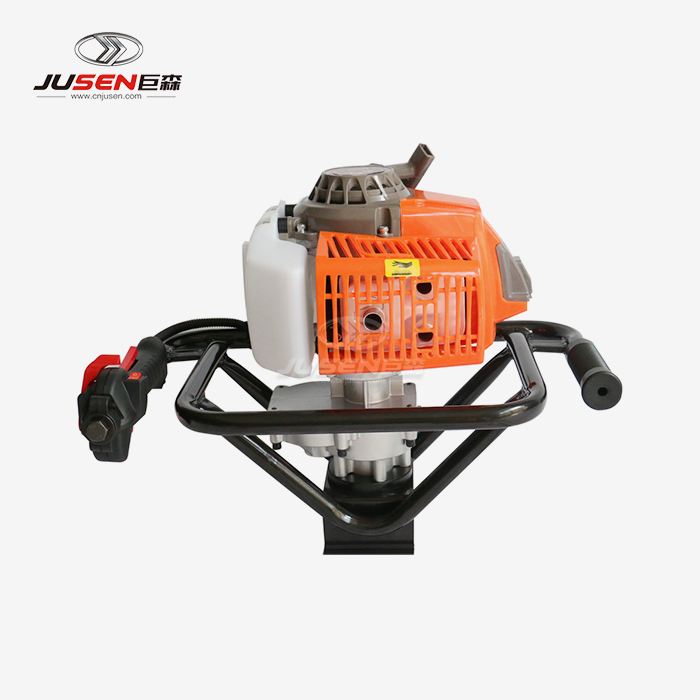 VIEW MORE63cc 2-Stroke Post Hole Digger
 VIEW MORELightweight And Durable Brushless Electric Chainsaw
 VIEW MORE43cc 2-Stroke Gasoline Brush Cutter
 VIEW MORE31cc 4-Stroke Gas Brush Cutter
 VIEW MORE58cc Strong Power Gasoline Chainsaw