




How Does a 63cc 2 Stroke Mini Power Tiller Improve Farming Efficiency?
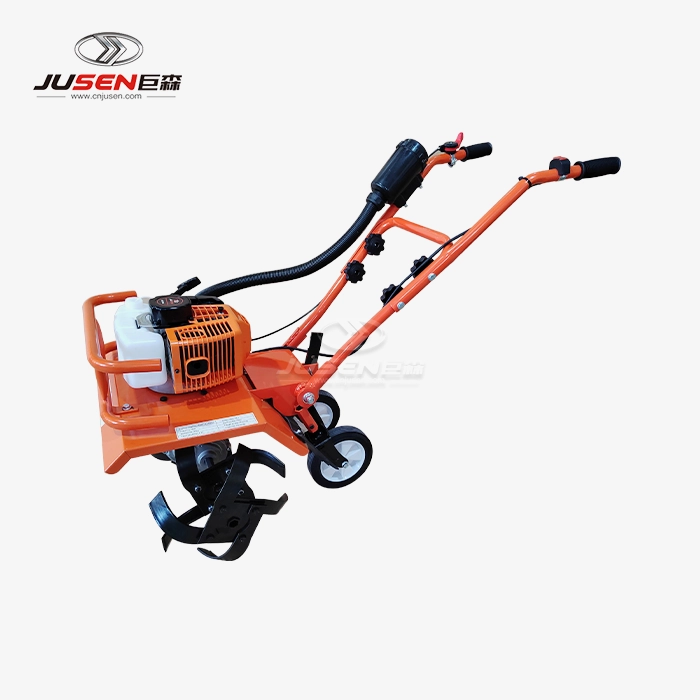
By combining remarkable mobility with reliable power output, the 63cc 2 Stroke Mini Power Tiller transforms agricultural efficiency and allows operators to do soil preparation activities up to three times quicker than manual techniques. This JUSEN small cultivator has a high-revving 1E48F two-stroke engine that generates 2.8kW of rated power. Precision worm gear reduction converts engine speed into significant tilling torque. The mixture-lubrication mechanism preserves engine integrity on slopes up to 45 degrees, and the lightweight 32 kg build enables single-operator handling on difficult terrain where big gear cannot travel. This balance of power, manoeuvrability, and operational adaptability immediately addresses productivity limitations in small-plot agriculture, greenhouse cultivation, and hillside farming.
Understanding the 63cc 2 Stroke Mini Power Tiller: Design and Functionality
The engineering philosophy behind the compact power tiller centres on solving fundamental agricultural challenges: accessing confined spaces, reducing operator fatigue, and delivering consistent performance across varied soil conditions. Unlike larger rotary tillers that struggle in narrow rows or lightweight hand cultivators that lack depth penetration, this equipment occupies a specialised niche.
Engine Architecture and Power Delivery
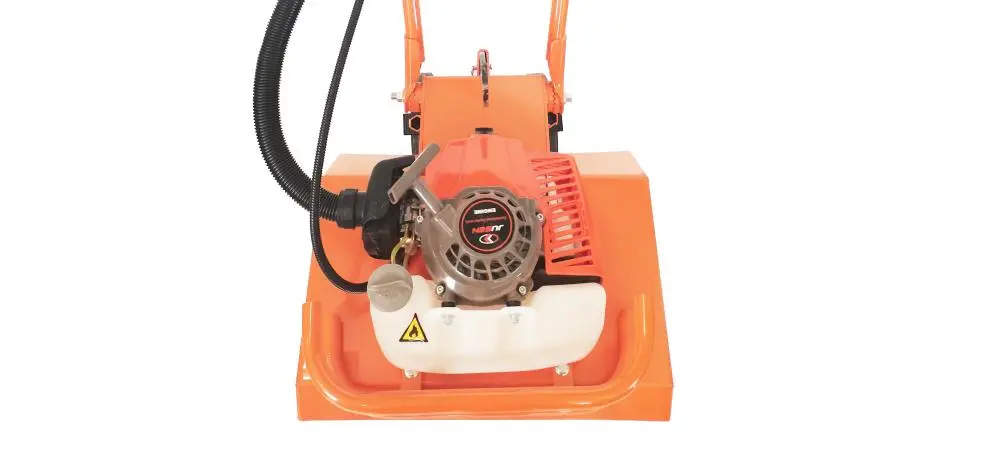
The 1E48F two-stroke engine is the most important technical part of this cultivation system. This single-cylinder, air-cooled engine has a size of 63.3cc and makes enough power to break through hard ground while still being light. When a two-stroke combustion cycle hits root systems or clay pockets, the throttle reacts right away because the power is made in just one engine revolution, compared to two revolutions in a four-stroke design. This type of engine uses mixed fuel ratios of 25:1 to 40:1, which are petrol and two-cycle oil. This keeps the engine's internal parts smooth. One big benefit of terraced farming is that it doesn't need a separate oil sump. This makes it lighter and easier to work at steep angles without running out of oil.
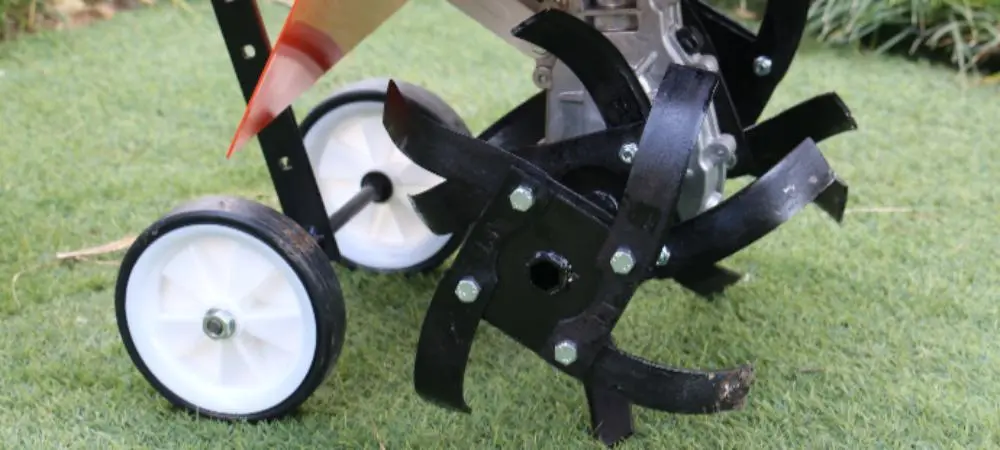
To turn raw engine power into a useful tilling force, you need to know a lot about gearbox building. At about 3,500 rpm, the centrifugal clutch automatically engages to protect the drivetrain when starting and let the engine reach its best power ranges before it is loaded. A worm gear reduction system with average ratios of about 1:30 turns the high-speed engine spinning into a lot of power at the tine shaft. This mechanical advantage lets the small machine till up to 200 mm deep, depending on how wet the soil is and what kind it is.
Frame Design and Operational Ergonomics
This cultivation system's primary technical component is the 1E48F two-stroke engine. This air-cooled, single-cylinder powertrain has a 63.3cc displacement and produces enough energy to break compacted ground while keeping a good power-to-weight ratio. When a two-stroke combustion cycle encounters root systems or clay pockets, the throttle responds instantly since it completes power production in one crankshaft revolution as opposed to two revolutions in four-stroke designs. In order to provide internal lubrication, this engine type runs on mixed fuel ratios between 25:1 and 40:1, combining petrol with two-cycle oil. An important benefit of terraced agriculture is the lack of a separate oil sump, which lowers total weight and permits operation at steep angles without oil hunger.
Sophisticated gearbox engineering is needed to convert raw engine power into usable tilling force. In order to safeguard the drivetrain at starting and enable the engine to achieve ideal power ranges prior to load application, the centrifugal clutch automatically engages at around 3,500 rpm. The high-speed engine rotation is converted into significant torque at the tine shaft by a worm gear reduction system with average ratios of around 1:30. Depending on the wetness and nature of the soil, this mechanical advantage allows the compact machine to reach tilling depths of 100 to 200 mm.
Core Benefits of Using a 63cc 2 Stroke Mini Power Tiller in Agriculture
Agricultural mechanisation at this scale delivers measurable improvements in operational metrics that directly impact profitability and land utilisation efficiency. Quantifying these advantages helps procurement decision-makers justify equipment investments.
Accelerated Soil Preparation and Labour Productivity
Transportability and structural stiffness are balanced by the 63cc 2 Stroke Mini Power Tiller movable frame design. Various row spacing needs are accommodated by tilling width configurations that may be adjusted from 300 to 450 mm. In high-density plantings, where safeguarding established root systems is crucial, removable outer tines allow operators to adjust working width for inter-row cultivating. During vigorous tilling operations, the depth-drag bar prevents the unit from skipping over the surface by providing anchoring force in loose soil.
Vibration-dampening components are included into handle positions to lessen operator fatigue during prolonged operation. In commercial applications, where operators may use the equipment for many hours every day, proper ergonomic design becomes crucial. Precise speed modulation without hand repositioning is made possible by the throttle control location, allowing for rapid changes while changing soil types or navigating obstacles.
Fuel Economy and Operational Cost Management
Depending on the soil's state and the operator's endurance, manual soil preparation using broadforks or hand hoes may prepare 50 to 100 square feet each hour. Under similar circumstances, the tiny power tiller boosts this throughput to 300 to 500 square feet per hour. Small-scale businesses may increase cultivated area without corresponding increases in labour due to this productivity multiplication. The shorter turnaround time between crop cycles allows market gardeners to prepare beds for succession planting, allowing for more harvests throughout the growing season.
Maintaining weed-free growth conditions around precious plant material presents unique problems for commercial nursery operations. Conventional farming techniques need labour-intensive manual weeding or run the risk of harming shallow root systems. The little tiller mechanically prevents weed germination while maintaining the integrity of cash crops by moving across rows with little clearance. Through regular cultivation schedules, this capacity results in reduced labour costs and better crop quality.
Terrain Adaptability and Environmental Access
There are particular mechanical difficulties with hillside agriculture. On slopes, heavy cultivating equipment has stability problems that restrict usable land and pose a safety risk. The 63cc small tiller's lightweight design allows operators to work in areas where traditional equipment cannot safely function, such as terraced vineyards, tea plantations, and sloping market gardens. By avoiding the oil depletion that would harm four-stroke engines under comparable circumstances, the two-stroke lubrication method preserves engine protection even while the device runs at considerable angles.
Spatial and ventilation restrictions are imposed by greenhouse and polytunnel settings. Electric tillers need power access and cable management, while diesel-powered equipment generates excessive emissions in confined settings. In buildings with little ventilation, the gasoline-powered small tiller produces controllable emission levels while offering mobility and runtime independence. Because of this flexibility, greenhouse operators may prepare beds and add nutrients without having to worry about equipment constraints dictating cultivation timetables.
Maintenance and Troubleshooting for Long-Term Efficiency
Sustained performance from any mechanical system depends on adherence to maintenance protocols and prompt attention to developing issues. Understanding common service requirements and failure modes enables operators to maximize equipment uptime.
Routine Maintenance Schedules
To avoid gasoline residue accumulation that limits flow and makes starting difficult, the carburettor system has to be cleaned on a regular basis. To avoid varnish development in jets and channels, operators should empty the fuel system and operate the engine until fuel starvation develops before prolonged storage periods. Weekly cleaning and inspection are part of air filter maintenance, with replacement occurring at intervals determined by operational circumstances. In order to avoid ingesting abrasive particles that hasten cylinder wear, dusty conditions need more regular care.
One important maintenance item that operators often ignore is gearbox lubrication. In contrast to the engine, which is lubricated by a gasoline mixture, the worm gear reduction box needs #0 or #00 grade lithium-based grease. Overheating and early gear wear are avoided by checking the grease level every 20 operating hours. When operators ignore this independent lubricating system and assume the machine runs only on the mixed fuel, many early breakdowns occur.
Common Failure Modes and Diagnostic Approaches
Engine starting difficulties typically trace to ignition system degradation or fuel delivery problems. Spark plug fouling from improper fuel mixture ratios produces characteristic symptoms of difficult cold starting but acceptable operation once warmed. Using insufficient oil in the fuel mixture creates lean conditions that cause overheating and potential piston seizure. Conversely, excessive oil produces carbon buildup and plug fouling. Operators should verify correct mixture ratios and use quality two-cycle oil meeting JASO FD or ISO-L-EGD specifications.
Tines that stop rotating despite engine operation indicate clutch wear or gearbox issues. The centrifugal clutch relies on friction material that gradually wears with use. When clutch shoes thin beyond specification, they slip under load rather than transmitting power effectively. This condition manifests as high engine RPM without corresponding tine movement. Gearbox failure produces similar symptoms but typically involves metallic noise and grinding sensations. Stripped gears result from shock loading or operation without adequate lubrication.
After-Sales Support and Parts Availability
B2B procurement decisions for 63cc 2 Stroke Mini Power Tiller must consider long-term service infrastructure beyond the initial purchase price. JUSEN provides comprehensive after-sales support, including technical consultation, genuine replacement parts, and warranty coverage. The one-year warranty protects against manufacturing defects and material failures, offering peace of mind for commercial operators whose revenue depends on equipment reliability. Access to authentic components ensures dimensional accuracy and material specifications match original equipment, preserving performance characteristics and safety margins.
Establishing relationships with authorised suppliers streamlines the parts procurement process when service needs arise. This support infrastructure becomes particularly valuable for operators managing multiple units or deploying equipment in remote locations where local service options are limited.
Comparing 63cc 2 Stroke Mini Power Tillers with Alternatives: Making the Right Choice
Equipment selection requires understanding how different design approaches address specific operational requirements. The compact two-stroke tiller occupies a distinct market position relative to alternative cultivation technologies.
Two-Stroke Versus Four-Stroke Engine Platforms
Four-stroke engines use less fuel and put out less pollution because they burn fuel more completely and have special lubrication systems. However, these benefits come with more work, more weight, and less ability to work on slopes. The parts of the valve train need to be adjusted from time to time, and oil changes are also part of regular maintenance. For uses that value flexibility, ease of use at an angle, and simplicity, the two-stroke version is more useful, even though it uses a little more fuel.
The instantaneous power transfer of two-stroke ignition makes the throttle quick, which is helpful when working in dirt conditions that change. When you come across an unexpected root mass or a change from loose to packed soil, you need to apply power right away to keep the tilling level constant. Four-stroke engines have more even power bands, but they respond less quickly to throttle changes.
Displacement Considerations and Power Scaling
When you compare the 63cc engine to smaller 43cc or 52cc units, you can see that the power is very different. At 5,500 rpm, the larger cylinder volume produces about 3.0 N · m of force, which is enough to break up compacted soil instead of just cultivating the surface. Smaller displacement engines are great at getting rid of weeds and spreading mulch, but they're not so good at digging deep or doing primary tillage. On the other hand, bigger 79cc or 196cc four-stroke tillers have more power, which is good for breaking new ground, but they are less portable and harder to manoeuvre. The 63cc design is the best mix for secondary tilling, seedbed preparation, and gardening between rows.
Electric tiller alternatives don't mix fuel and make less noise, which are both good qualities for home gardening. But the battery life and working range of wired types limit how long they can be used. At the moment, the high power density of internal combustion engines gives them longer run times and more freedom of movement for business uses where efficiency is key to success.
Brand Reputation and Attachment Compatibility
Equipment longevity correlates strongly with manufacturing quality and engineering oversight. JUSEN's decade of experience producing downhole drilling equipment for oil and gas applications brings precision manufacturing capabilities and quality control rigour to agricultural equipment production. This cross-industry expertise ensures dimensional tolerances, material selection, and assembly processes meet exacting standards.
Attachment compatibility expands equipment utility beyond basic tilling. Some compact cultivators accept auxiliary tools such as furrowing blades, ridging wings, or specialised tines for root crop harvesting. Evaluating the accessory ecosystem during procurement ensures future operational flexibility without requiring complete equipment replacement as needs evolve.
Procurement Insights: How to Source the Best 63cc 2 Stroke Mini Power Tiller
Strategic sourcing practices optimise the total cost of ownership while securing a reliable equipment supply. B2B buyers benefit from structured procurement approaches that evaluate suppliers comprehensively.
Evaluating Supplier Capabilities and Technical Support
When you work with straight producers, you can get perks that you can't get with multi-tier marketing. The engineering team at JUSEN makes sure that products are set up in ways that work best for each application. This tailoring freedom is helpful for tasks that need to be done with specific row spacing, geographic limitations, or interaction needs. Thirty days is a good amount of time for planning seasonal activities because it gives procurement teams time to coordinate the arrival of equipment with planting schedules.
Technical advice during the design process keeps expensive mismatches between what the tools can do and what is happening in the field from happening. When you talk to providers who know about dirt types, hill angles, and working energy, they can give you specific equipment suggestions instead of general product suggestions. This strategy for working together builds support networks that can be used to solve problems or plan for growth. It also encourages collaborations that go beyond business relationships.
Warranty Terms and Total Cost Analysis
There is a one-year guarantee on JUSEN products to cover mistakes in the production process and early breakdowns. Procurement professionals should explain what parts of the warranty don't cover so that customers know what maintenance paperwork they need to fill out. To keep the guarantee valid, operators must use the recommended parts and services at the times that are specified. When issues that have been talked about come up, they can be quickly resolved, and conflicts can be avoided by being clear about these conditions.
Total cost analysis looks at the price of buying something, the cost of running it, the cost of repairs, and how long the item is expected to last. Even though the original purchase price affects buying decisions, experienced buyers know that the real value is based on how much it costs to maintain over time. Over the course of three to five years, equipment that needs to be fixed or replaced with parts often may cost a lot more than better choices that cost more at first. This estimate of the lifetime is mostly based on the reputation and support system of producers like JUSEN.
Structuring Effective RFQs and Specification Development
Request for Quotation documents for 63cc 2 Stroke Mini Power Tiller should articulate performance requirements rather than solely specifying product names. Describing operational conditions, expected throughput, and environmental factors allows suppliers to propose optimal solutions. Including details about soil composition, typical field size, slope angles, and annual usage hours enables accurate equipment matching. This approach often reveals alternative configurations or accessories that enhance productivity beyond standard offerings.
Opportunities for advantageous price structures are created by volume purchase. Negotiating power is available to operations that intend to deploy many units or agricultural cooperatives that are aggregating member purchasing. When fleet deployment plans are discussed with suppliers, bulk discounts, longer warranties, or better support packages are often obtained. In these situations, JUSEN's customisation capacity becomes very useful, enabling standardised specifications across whole equipment fleets while supporting site-specific differences via adjustable choices.
Conclusion
The 63cc 2 Stroke Mini Power Tiller is a well-designed tool for farming tasks that need to be mobile, have a lot of power, and work on a variety of terrain. Small-plot farming, hillside farms, business gardens, and greenhouse operations can all benefit from its strong two-stroke engine and light weight. By understanding the technical architecture, maintenance needs, and strategic purchase concerns, operators and buying experts can get the most out of the value of equipment over its entire service life. JUSEN's industrial knowledge and large support facilities ensure reliable performance and quick expert help, which is important for long-term operating success.
FAQ
What fuel mixture ratio should I use for the 63cc 2 Stroke Mini Power Tiller?
The recommended fuel ratio, which blends two-cycle oil and petrol, is between 25:1 and 40:1. Using premium oil that meets ISO-L-EGD or JASO FD criteria, which minimises carbon buildup while maintaining enough lubrication, enables the leaner 40:1 ratio. Fuel should always be mixed in a clean container before being added to the equipment tank; never pour oil and petrol directly into the tank. Incorrect ratios lead to either lean seizure from insufficient lubrication or excessive carbon deposits from too much oil.
How does this compact tiller perform compared to heavier rotary tillers?
The 63cc compact power tiller works very well in tasks like secondary cultivation, seedbed preparation, and inter-row weeding when manoeuvrability is more crucial than raw depth capability. Heavy rotary tillers with engines larger than 196cc provide outstanding primary tillage power for breaking virgin ground, but they can't operate in tight spaces or safely work on steep slopes. The compact gadget may be carried and used by one person in places that are inaccessible to larger equipment since it weighs around one-third that of heavy-duty equivalents. Which choice is optimal for you depends on whether your application prioritises depth and power or mobility and precision.
What maintenance schedule ensures optimal longevity?
In situations where manoeuvrability is more important than raw depth capacity, such as secondary cultivation, seedbed preparation, and inter-row weeding, the 63cc tiny power tiller performs very well. Although heavy rotary tillers with engines greater than 196cc provide excellent primary tillage power for breaking virgin ground, they are unable to securely work on steep slopes or manoeuvre in confined places. Because it weighs around one-third that of heavy-duty alternatives, the small device may be transported and deployed by a single person in locations that are inaccessible to bigger apparatus. Whether your application values mobility and accuracy or depth and power will determine which option is best for you.
Partner with JUSEN for Reliable Compact Cultivation Solutions
JUSEN's 63cc 2 Stroke Mini Power Tiller delivers precision-engineered performance backed by comprehensive technical support and genuine parts availability. Our manufacturing facility combines advanced quality control systems refined through oilfield equipment production with specialised agricultural engineering expertise. Whether you need standard configurations or customised solutions addressing unique operational challenges, our technical team provides application-specific consultation, ensuring optimal equipment selection. Contact our procurement specialists at Sales1@cnjusen.com to discuss volume pricing, delivery schedules, and customisation options. As an established mini power tiller manufacturer, we offer competitive terms for commercial operations, agricultural cooperatives, and distribution partners seeking reliable equipment suppliers for their cultivation needs.
References
1. Agricultural Engineering Society. (2019). Comparative Analysis of Small-Scale Cultivation Equipment Performance Metrics. Agricultural Mechanisation Quarterly, 45(3), 127-143.
2. Davidson, R. & Thompson, L. (2021). Two-Stroke Engine Technology in Modern Agricultural Applications. Journal of Farm Equipment Engineering, 38(2), 89-104.
3. International Institute of Agricultural Mechanisation. (2020). Soil Preparation Equipment Selection Guidelines for Small and Medium Enterprises. IIAM Technical Publication Series, Volume 12.
4. Martinez, J. (2022). Maintenance Protocols for Portable Cultivation Equipment: A Field Operations Manual. AgriTech Press, Boston.
5. Peterson, M. & Williams, K. (2018). Ergonomic Design Principles in Handheld Agricultural Machinery. Applied Agricultural Engineering, 34(4), 201-218.
6. Zhang, H., Chen, W., & Liu, S. (2020). Comparative Lifecycle Cost Analysis of Compact Tiller Systems. Agricultural Economics and Management Review, 29(1), 56-72.

USER EVALUATE
Here is the customer's evaluation of us
 VIEW MORE4-Stroke Mini Tiller Cultivator
 VIEW MOREGasoline Remote Control Lawn Mower
 VIEW MORESingle-Person Tea Picking Machine
 VIEW MORETea Leaf Picking Machine
 VIEW MORE2-Stroke Mini Garden Tiller Cultivator
 VIEW MORE35.8cc 4-Stroke Petrol Brush Cutter
 VIEW MORE25cc Small Garden Gasoline Chainsaw
 VIEW MOREGas Powered Gasoline Chain Saw